One Architecture. Ten Industries. The Intelligence Layer African Operations Have Never Had.
Crelligent Intelligent Systems deploys operational intelligence infrastructure across African industry — connecting the physical world of assets, vehicles, energy, and transactions to a unified command intelligence layer powered by PRISM.
.png&w=1920&q=75)
Our Products
.png&w=3840&q=75)
.png&w=3840&q=75)
Not Ten Products. One Platform Applied Across Ten Verticals.
Most technology companies build a separate product for each industry — a fleet solution here, an energy monitoring tool there. The result is fragmented data, duplicated costs, and no single view of the business.
Crelligent Intelligent Systems is built differently. We designed one architecture — five layers from hardware to executive command — and we apply that same architecture across every industry we enter. The hardware changes. The platform stays the same.
This means an organisation operating across logistics, energy, and retail gets one command centre, one intelligence layer, and one team. Not three vendors, three dashboards, and three contracts.
Crelligent Edge Module (CEM)
Purpose-built IoT hardware deployed at the point of operation — vehicles, generators, tanks, machines, buildings, soil, retail counters.
4G/LTE | LoRa | Wi-Fi | GPRS
Designed for Nigerian and African network conditions. Offline-resilient with local data buffering when connectivity drops.
CEIP — Crelligent Edge Intelligence Platform
Real-time telemetry ingestion, normalisation, and event processing. Every data point structured for intelligence, not just storage.
PRISM — Enterprise Intelligence Operating System
Anomaly detection. Pattern recognition. Predictive analytics. AI-powered conversational queries. The command centre for operations.
Executive Command Centre
One screen. Real-time operational state of the entire organization. Configurable per industry and per role.
Ten Industries. One Shared Intelligence Architecture.
We enter each vertical with the same methodology: design the operating model first, then deploy the intelligence infrastructure that serves it.
Six Devices. One Unified Intelligence Ecosystem.
Purpose-built hardware designed for African operating conditions — from edge nodes that survive generator surges to command displays that visualise your entire operation. Every device feeds data into PRISM for real-time operational intelligence.
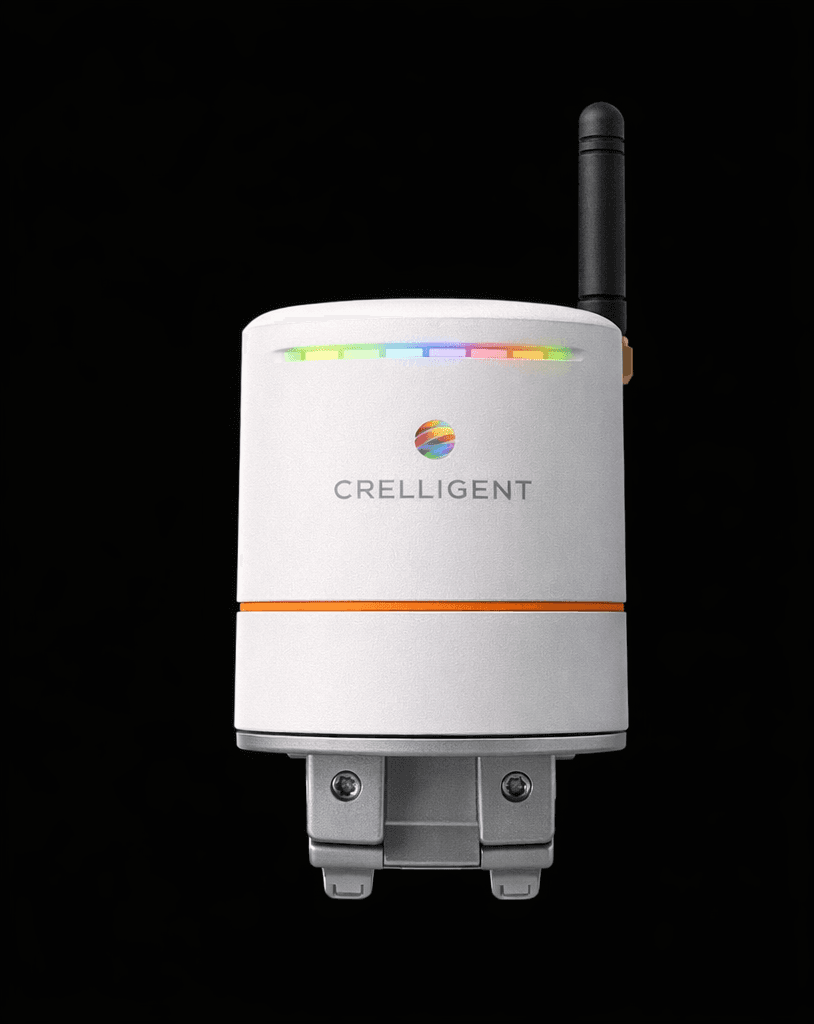
Crelligent Edge Node (CEN)
Connects legacy industrial machines and modern sensors into a unified data system. Aggregates, processes, stores, and transmits data from multiple sources.
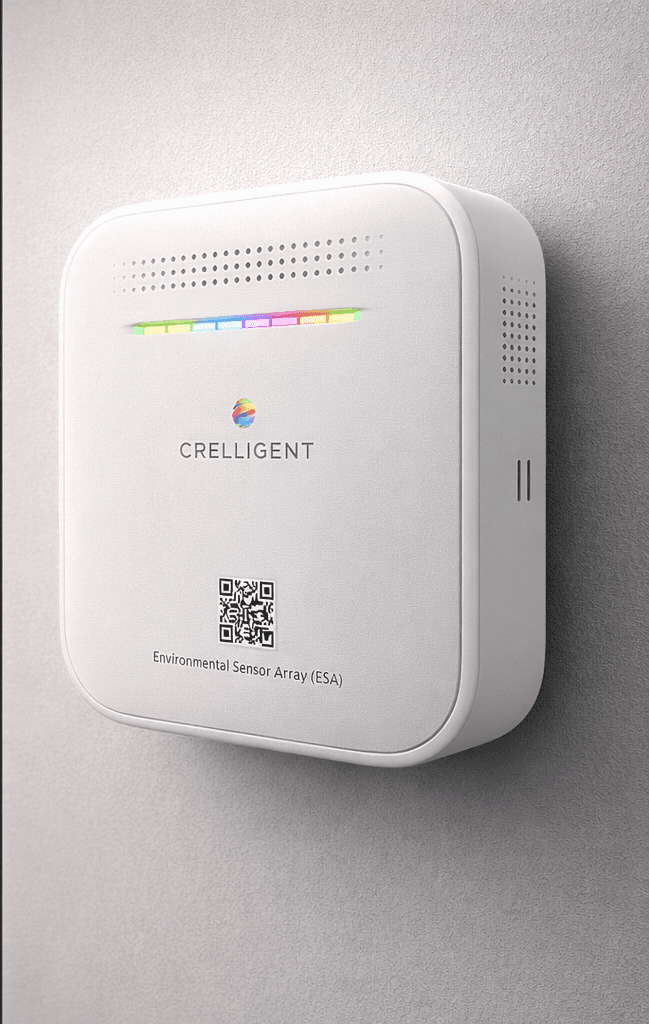
Environmental Sensor Array (ESA)
Real-time environmental monitoring — air quality, climate, and compliance. Pharmaceutical cold chains, cleanrooms, and food storage.
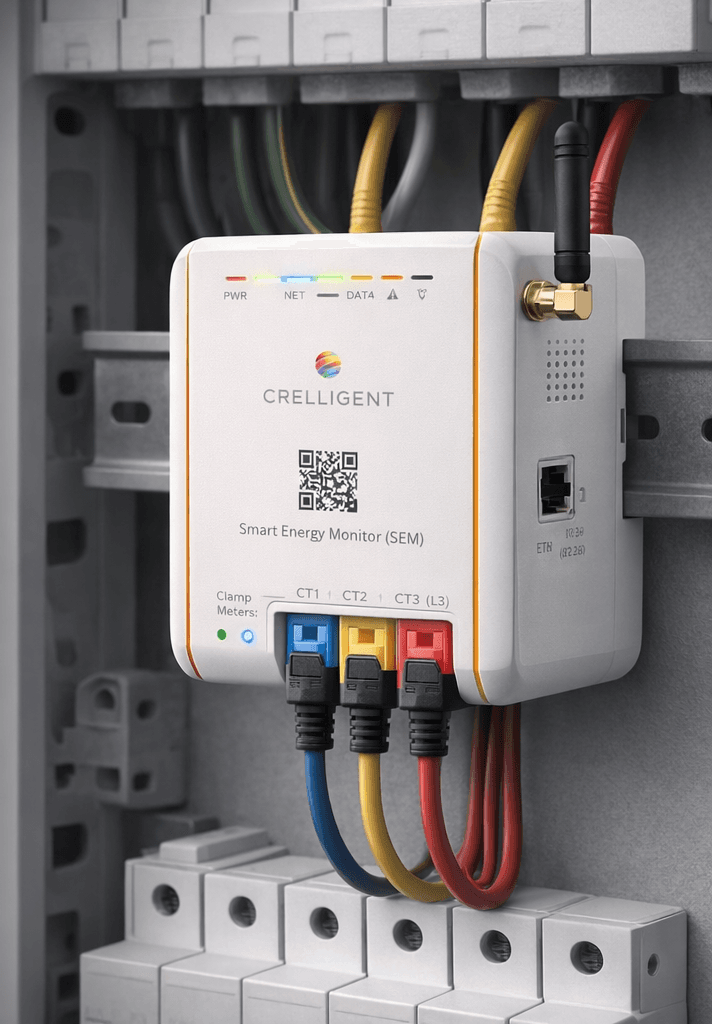
Smart Energy Monitor (SEM)
Non-invasive energy monitoring via CT clamps. Per-tenant billing, generator optimization, and ESG carbon tracking without rewiring.
Tank Level Monitor (TLM)
Ultrasonic or pressure-based tank monitoring with real-time fuel theft detection and automated replenishment triggers.
Crelligent Edge Panel (CEP)
Rugged touchscreen for on-site monitoring and operator control. Factory floors, warehouses, and depot stations.
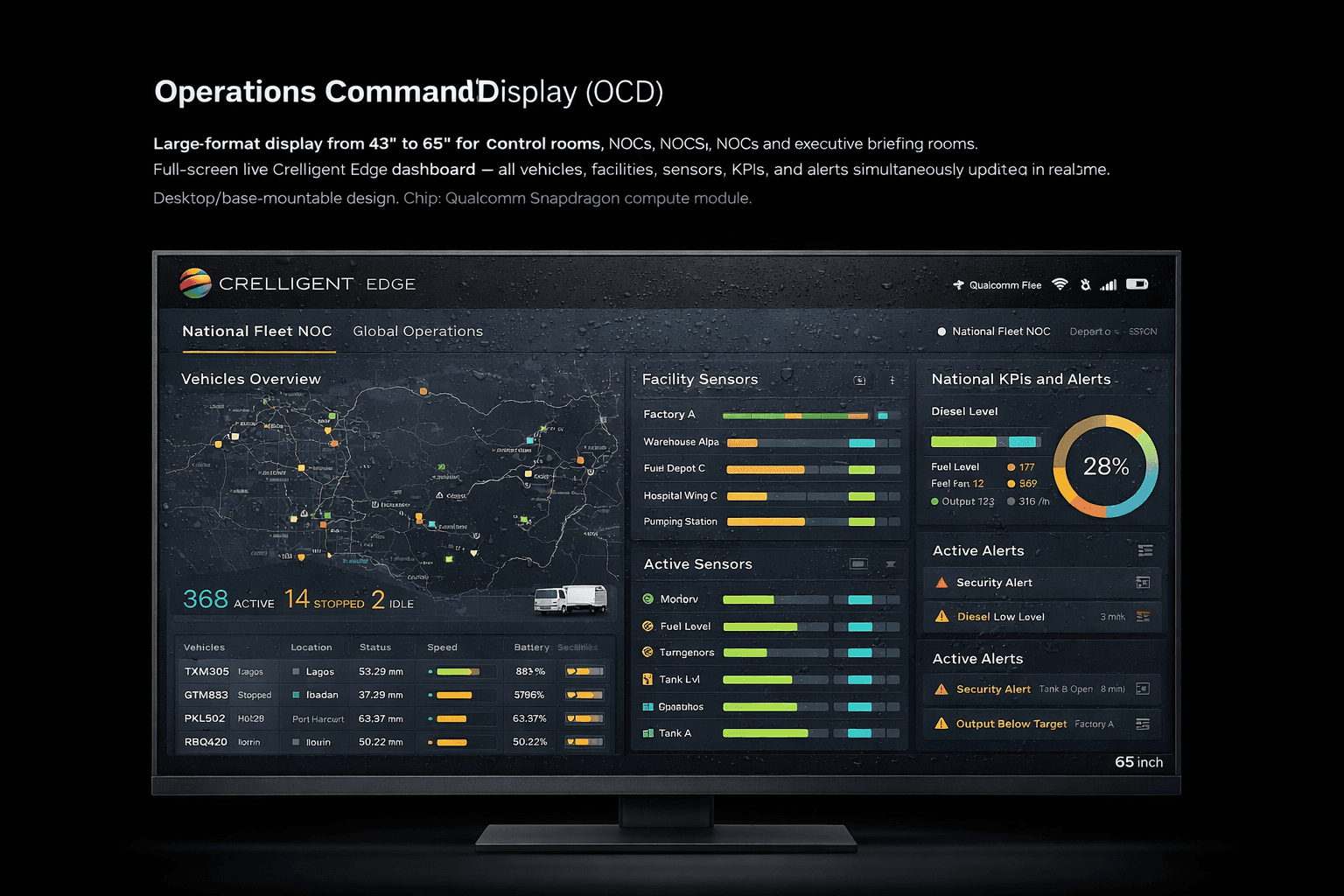
Operations Command Display (OCD)
Large-format display for centralized command visibility — fleet operations, manufacturing control rooms, and executive dashboards.
Every Sensor Feeds PRISM. Every Alert Reaches the Right Person.
Data without intelligence is noise. The CEM hardware is the nervous system; PRISM is the brain. Every telemetry point — every GPS coordinate, fuel level reading, voltage spike, or transaction record — flows into PRISM, where it is structured, analysed, and transformed into operational intelligence.
PRISM doesn't just display data. It answers the questions that operations leaders actually need answered:
From Assessment to Intelligence in 12 Weeks.
OPERATIONAL ASSESSMENT
We map your existing operations, asset inventory, connectivity landscape, and data gaps. No assumptions — we understand your business first.
- Site surveys and physical infrastructure mapping
- Integration requirements for legacy systems
- Definition of operational KPIs and alert thresholds
- Connectivity strength testing (GSM/LoRa)
HARDWARE DEPLOYMENT
CEM devices are installed, commissioned, and verified. Field engineers validate signal quality, sensor calibration, and data flow from every connected point.
- Physical installation of edge nodes and sensors
- Power integration (Mains/Generator/Solar/Battery)
- Signal calibration and baseline data testing
- Security encryption keys provisioning
PLATFORM CONFIGURATION
PRISM is configured to your industry vertical, organizational structure, and KPI framework. Dashboards, alerts, and workflows are built for your team.
- Custom dashboard creation per user role
- Alerting thresholds and escalation workflows
- Historical data migration (if applicable)
- AI conversational model fine-tuning
COMMAND HANDOVER
Your operations team is trained, the command centre goes live, and Crelligent remains on-hand for the first 30 days of full operation.
- Executive and operator platform training sessions
- Command centre physical display setup
- User acceptance testing (UAT)
- Transition to 24/7 SLA support phase
Your Operations Are Generating Data Right Now. The Question Is Whether Anyone Can Read It.
Every vehicle moving, every generator running, every tank filling — all of it is data that currently evaporates. Crelligent Intelligent Systems captures that data, structures it, and turns it into the operational intelligence your leadership team needs to make decisions with confidence. The infrastructure exists. The platform is proven. The only question is when you decide to use it.